
Impact of Implant Surface Properties on Osseointegration Dynamics
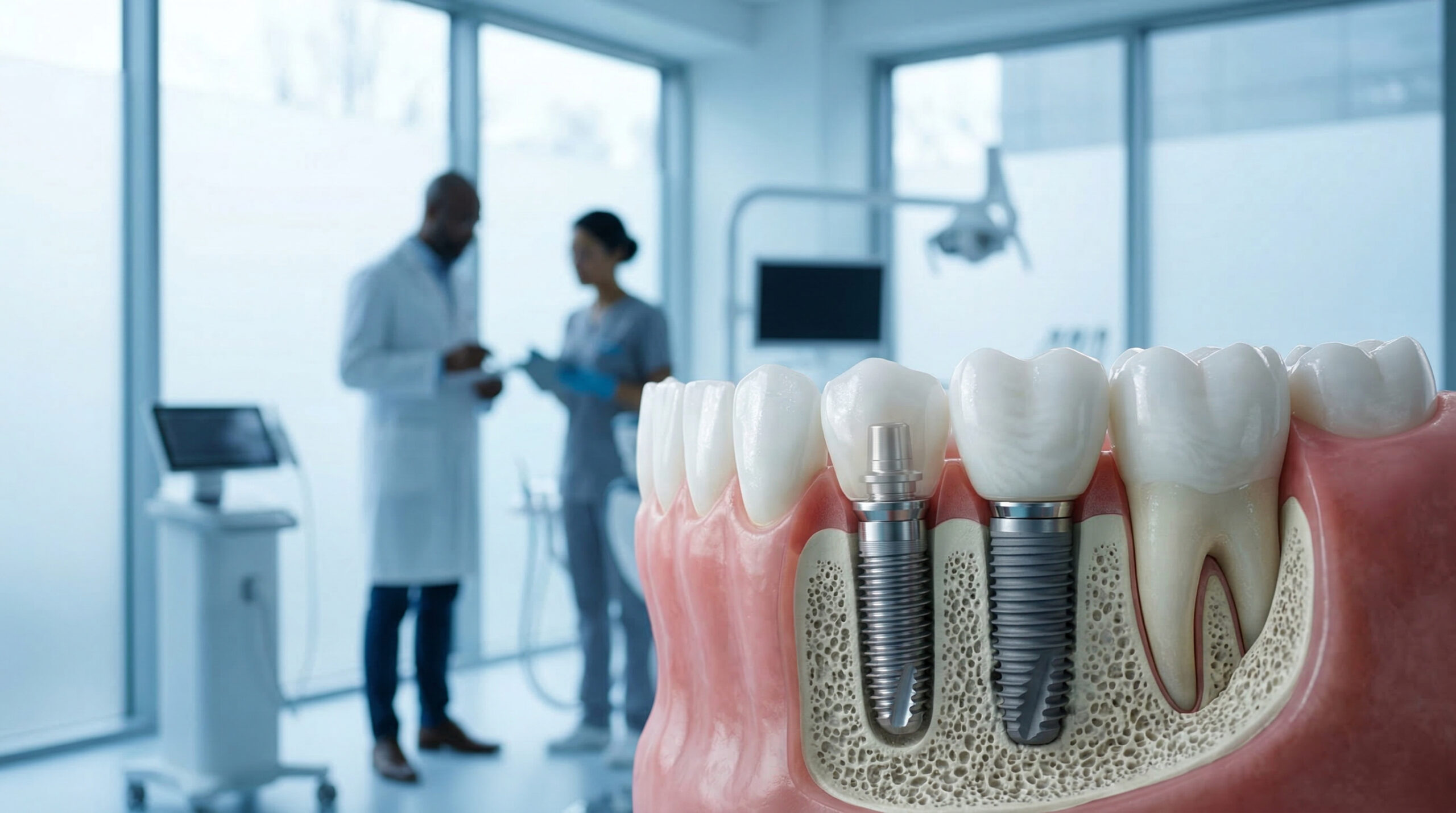
Osseointegration is the cornerstone of long‑term success for endosseous dental implants, defined as a direct structural and functional connection between ordered, living bone and the surface of a load‑carrying implant.
Recent evidence indicates that implant surface properties, including roughness, topography, energy, and wettability, directly influence the dynamics of osseointegration—its rate, volume, and quality—and thereby affect the feasibility and outcomes of immediate and early loading protocols.
Key surface‑property factors
Surface roughness and micro‑topography: Moderately rough surfaces (e.g., SLA, SLActive, anodized, HA‑coated) increase the effective surface area and promote osteoblastic cell adhesion and differentiation, leading to faster bone formation at the bone–implant interface (BIC).
Animal and human studies show that roughened surfaces yield higher BIC values compared with smooth, machined surfaces, particularly in the early healing phase.
Surface energy and wettability: Hydrophilic surfaces attract blood and biological fluids rapidly, stabilize the initial fibrin–protein matrix on the implant, and stimulate an organized inflammatory phase that favors early osseointegration.
Comparisons of similar micro‑topography but different surface chemistry (e.g., SLA vs SLActive) reveal accelerated osseointegration and higher interfacial stiffness with the hydrophilic variant in the first 2–4 weeks. (1)
Chemical composition and nano‑topography: Chemical modifications such as anodization, hydroxyapatite coatings, or nano‑textured surfaces enhance bioactivity and osteoconductivity, modulating protein adsorption and cell signaling toward osteogenic differentiation.
Nano‑tubes or micro‑pores can act as reservoirs for growth‑factor or bioactive‑peptide delivery, providing a slow‑release system that further augments osseointegration at the implantation site.
Clinical implications for osseointegration dynamics
In sites with limited bone volume or lower quality, optimized surfaces (rough + hydrophilic + bioactive) support faster bone formation, higher BIC, and reduced marginal bone loss over time.
For immediate/early loading in selected patients, implant designs with modified surfaces consistently demonstrate higher implant stability quotients (ISQ) and improved early BIC when compared with conventionally machined implants.
Practical take‑homes for BAIRD trainees
Match the implant surface type to the clinical scenario (bone quality, anatomical situation, and loading protocol).
In compromised bone (osteoporotic, resorbed, or thin ridges), prefer surfaces with controlled roughness, strong hydrophilicity, and evidence‑based bioactive coatings to support robust osseointegration dynamics.
Maintain strict surface‑handling protocols to avoid contamination, as taught in BAIRD’s hands‑on training programs; this ensures the engineered surface properties are preserved until placement.